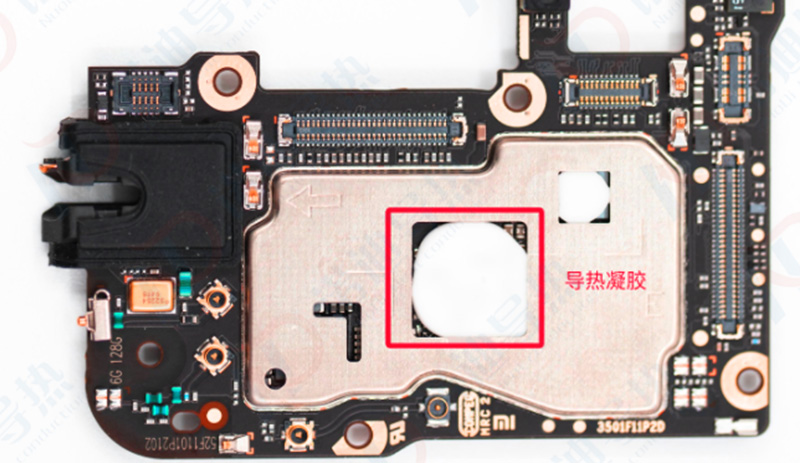
With the rapid advancement of technology, various electronic devices and industrial machinery are continuously updated and iterated, boasting increasingly powerful performance. However, the accompanying heat dissipation challenges have become an inevitable bottleneck restricting further development of such equipment. From smartphones to data center servers, and from battery systems in new energy vehicles to aerospace instruments, heat dissipation issues not only affect equipment stability and service life but also impact overall performance and safety. Thermal conductive phase change materials, with their unique charm and superior performance, are quietly triggering a new revolution in the field of heat dissipation technology.
As the name suggests, the core mystery of thermal conductive phase change materials lies in "phase change." These materials can undergo phase transitions such as solid-liquid or liquid-gas within specific temperature ranges. When equipment generates heat during operation and the temperature rises to the melting point of the phase change material, it gradually transitions from a solid to a liquid state. During this process, the phase change material absorbs a large amount of heat, which does not cause a sharp increase in its temperature but is stored in the form of latent heat. It is akin to a giant "heat sponge" silently absorbing excess heat generated by the equipment. When the equipment stops running or heat dissipates and the temperature drops, the phase change material gradually transitions back from liquid to solid, releasing the stored heat. This characteristic of absorbing and releasing substantial heat while maintaining relatively stable temperature during phase change makes thermal conductive phase change materials effective thermal energy storage and regulation media, offering a brand-new solution to heat dissipation challenges.
Compared to traditional heat dissipation materials, thermal conductive phase change materials have higher heat capacity and lower thermal resistance. They can absorb large amounts of heat in a short time, effectively reducing equipment operating temperatures and controlling temperature fluctuations within a narrow range. Take data center servers as an example: during prolonged high-load operation, servers generate massive heat, which traditional heat dissipation methods may struggle to dissipate quickly, leading to overheating, performance degradation, or even failures. With thermal conductive phase change materials, heat generated by servers can be rapidly absorbed, and evenly distributed and stored through the material’s phase change process, keeping servers within an optimal temperature range and significantly improving their stability and reliability.
Thermal conductive phase change materials exhibit excellent adaptability and compatibility, allowing customization and optimization for different application scenarios and requirements. They can stably dissipate heat in high-temperature, low-temperature, or complex electromagnetic environments. In the new energy vehicle sector, battery systems have strict temperature requirements, as extreme temperatures can affect battery performance and lifespan. Phase change materials can be selected and designed according to the battery’s operating temperature range, applied between battery modules or between batteries and heat dissipation systems to effectively regulate battery temperature and enhance safety and endurance.
In today’s era of advocating green environmental protection and sustainable development, thermal conductive phase change materials also demonstrate unique advantages. They are typically made from eco-friendly organic or inorganic materials, generating no harmful substances during production or use, and are environmentally friendly. Moreover, by effectively improving equipment heat dissipation efficiency and reducing energy waste, they help lower equipment energy consumption and achieve energy conservation and emission reduction goals. For example, using thermal conductive phase change materials in the heat dissipation systems of large industrial equipment can reduce the operating time and power of cooling fans, thereby cutting energy consumption and operational costs.
In summary, thermal conductive phase change materials, with their unique phase change properties, excellent heat dissipation performance, and broad application prospects, are leading heat dissipation technology into a new era of transformation. In future technological development, they are poised to become the key to solving heat dissipation challenges, providing strong support for various industries and ushering in a more efficient, stable, and green technological era.

QQ客服1
QQ客服2
13713346890
dg_jnkj@163.com


