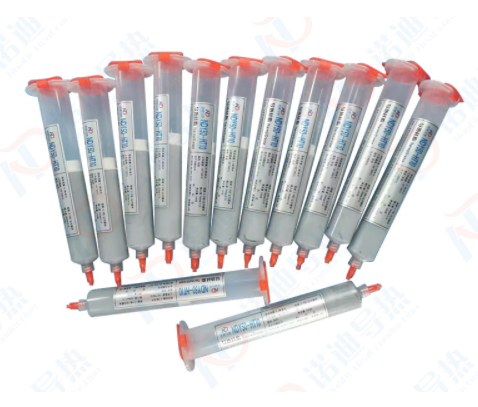
(I) Usage Methods
Clean the surfaces: Before applying thermal grease, carefully clean the surfaces of the heat-dissipating components (such as the CPU) and the radiator using high-purity solvents (such as high-purity isoamyl alcohol or acetone) and lint-free cloths (such as lens-cleaning cloths). This step is crucial because even tiny dust particles, oils, or other contaminants can affect the adhesion of the thermal grease to the surfaces, thereby influencing heat dissipation performance. For example, a fingerprint left on the CPU surface may be approximately 0.005 inches thick, which is sufficient to hinder heat transfer.
Determine the application location and amount: Identify the area on the heat sink that contacts the heat-generating component (such as the CPU), and squeeze an appropriate amount of thermal grease at the center of this area. Generally, for a standard CPU, an amount the size of half a grain of rice is usually sufficient. Excessive thermal grease not only causes waste but may also be squeezed out during radiator installation, contaminating other components such as the motherboard or even causing short circuits.
Apply and distribute evenly: Use a clean tool such as a razor blade, the edge of a credit card, or a clean knife to pick up a small amount of thermal grease and transfer it to one corner of the heat-generating component's core. Then, put on a plastic bag over your finger and rub the thermal grease on the bottom of the radiator using clockwise and counterclockwise motions to evenly spread the thermal grease across the entire contact area with the heat-generating component, ensuring it fills the gaps and uneven spots at the bottom of the radiator. Note that you should not apply the grease directly with your fingers to prevent contaminants such as oils from your hands from mixing into the thermal grease. Next, use a lint-free cloth to wipe off the excess thermal grease from the bottom of the radiator—you will notice that the areas where thermal grease is applied have a different color from other regions, indicating that the grease has evenly filled the gaps in the base. Finally, use a razor blade or other clean tool to evenly apply the thermal grease across the entire core of the heat-generating component starting from one corner. The flatter the contact surface, the thinner the required layer of thermal grease. For a standard radiator base, the thickness of the thermal grease is approximately that of a regular sheet of paper (0.003–0.005 inches), and if the radiator base is smooth and shiny, the thermal grease can be applied as thin as a semi-transparent layer.
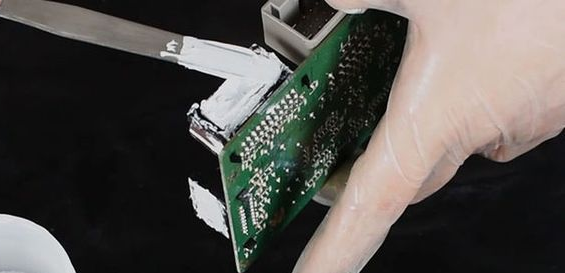
Installing the radiator: After confirming that there are no foreign objects on the base of the radiator and the core surface of the heating component, carefully place the radiator onto the heating component. At this point, only light pressure should be applied; do not rotate or translate the radiator, as this may cause uneven thickness of the thermal grease between the radiator and the heating component, affecting the heat dissipation effect. Finally, fasten the radiator clips to complete the installation.
(2) Precautions
Avoid excessive use: The main role of thermal grease is to fill the gaps between the heating component and the radiator surface, and it is not that the thicker the application, the better. In fact, in terms of thermal conductivity, even the best thermal grease has lower thermal conductivity than metal materials such as copper and aluminum. An excessively thick layer of thermal grease will not only fail to enhance the heat dissipation effect but may also increase thermal resistance, reduce heat transfer efficiency, and may cause problems such as air bubbles, further affecting thermal performance.
Replace regularly: Most ordinary thermal greases will experience "drying" or "hardening" after being used for six months or longer. This is because the liquid components (such as silicone oil) in the thermal grease gradually volatilize during long-term use, leading to a decline in the performance of the thermal grease. Therefore, it is recommended to regularly check the condition of the thermal grease and replace it every 1-2 years to ensure good heat dissipation effects. Especially for equipment used in high-temperature environments for a long time, the performance of the thermal grease may decline faster and requires more timely replacement.
Prevent contamination: During the application of thermal grease, pay attention to preventing other contaminants from mixing into the grease. As mentioned earlier, oils from the hands, dust in the air, etc., may affect the performance of the thermal grease. Once the thermal grease is contaminated, its thermal conductivity and filling effect will be affected, thereby reducing heat dissipation efficiency.
Use safely: If the thermal grease comes into contact with the skin accidentally, it should be wiped clean immediately and then rinsed with water; if it comes into contact with the eyes accidentally, rinse with water immediately and go to the hospital for examination as soon as possible to ensure safety.

QQ客服1
QQ客服2
13713346890
dg_jnkj@163.com


