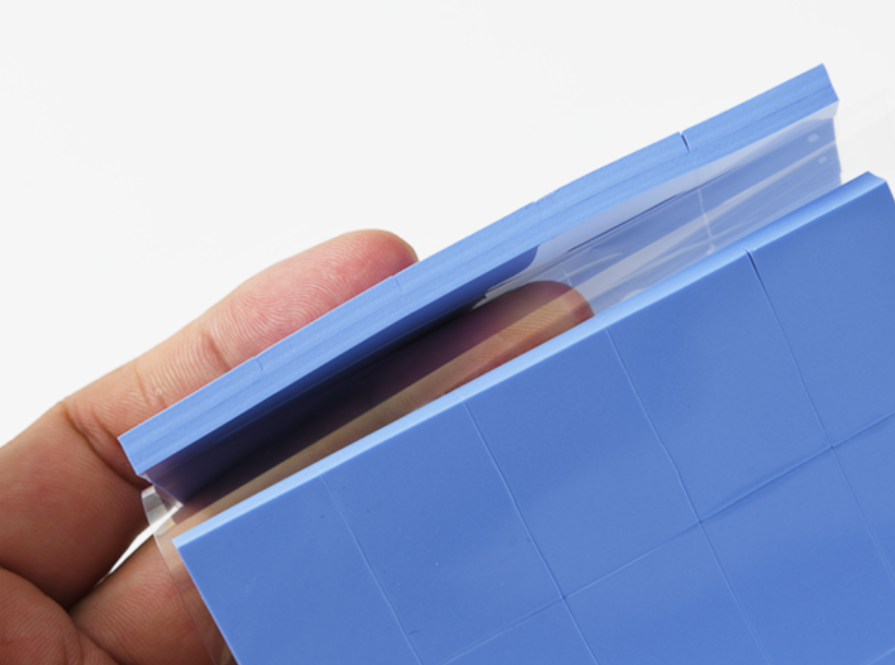
The degradation of thermal silicone pads is the result of multiple factors acting together, primarily including the following aspects:
1.Temperature Cycling and Aging
When electronic devices operate, thermal silicone pads undergo frequent temperature fluctuations, causing the pads to repeatedly expand and contract. This accelerates the aging of their internal structure. Over time, the molecular structure of the thermal silicone gradually changes, leading to a decline in thermal conductivity and a corresponding reduction in heat dissipation efficiency. For example, in high-performance computers, prolonged high-load operation of the CPU generates significant heat, causing drastic temperature changes in the environment where the thermal silicone pad is located, thereby accelerating its aging.
2.Pressure Changes and Seal Failure
Pressure fluctuations generated during device operation subject thermal silicone pads to continuous stress. Over the long term, this can degrade the pad’s sealing performance, resulting in poor thermal contact. When the thermal interface no longer makes close contact, heat transfer efficiency decreases, and heat dissipation performance declines. For instance, in server equipment operating over extended periods, internal vibrations and other factors may cause changes in the pressure exerted on thermal silicone pads, thereby affecting their sealing properties.
3.Moisture Absorption and Oxidation
Thermal silicone pads are hygroscopic and will absorb moisture and swell when exposed to humid environments for extended periods, altering their physical properties. Additionally, the presence of moisture can trigger oxidation reactions within the pads, further damaging the material’s thermal conductivity. In high-humidity environments such as data centers, if moisture-proof measures are inadequate, thermal silicone pads are prone to accelerated degradation due to moisture absorption.
4.Environmental Contamination
Dust, oil, or chemical contaminants in the external environment may penetrate the surface or interior of thermal silicone pads, altering the material’s physical properties and reducing thermal conductivity. For example, in industrial production environments with high levels of airborne dust and oil, these contaminants easily adhere to thermal silicone pads, impairing their heat dissipation efficiency.
5.Mechanical Stress Damage
During equipment installation, maintenance, transportation, or operation, exposure to high-frequency vibrations or mechanical shocks can subject thermal silicone pads to external impacts or pressure, leading to scratches, indentations, or even fractures. These issues damage the internal structure of the pads, significantly reducing their thermal conductivity. For instance, mobile electronic devices like laptops may experience vibrations and impacts during handling, damaging the internal thermal silicone pads.
6.Improper Material Selection
If the material composition of a thermal silicone pad is unsuitable for a specific application environment—such as having too low a thermal conductivity or insufficient thermal stability—it may fail to meet heat dissipation requirements even with correct installation, potentially deforming or aging rapidly at high temperatures. For example, in 5G base station equipment with high heat dissipation demands, using thermal silicone pads with inadequate thermal conductivity can easily lead to performance degradation over time.

QQ客服1
QQ客服2
13713346890
dg_jnkj@163.com


